When Light Returns: A Thanksgiving Story About Designing for New Beginnings
A heartwarming Thanksgiving interior design story about creating spaces for blended families. Discover how thoughtful design helps new families feel at home together.
The Dining Room for Two Families
The consultation request came through Instagram DM in early November: Need help with dining room. First Thanksgiving as blended family. Six kids total. Need everyone to feel like it's their table.
Aisha had designed dozens of dining spaces in her eight years working in Nashville—everything from formal spaces in Belle Meade mansions to cozy breakfast nooks in East Nashville bungalows. But something about this message made her pause. Six kids. Blended family. First Thanksgiving together. This wasn't about creating a beautiful room. This was about designing a foundation for a new family's life.
She met Sarah and Marcus on a Saturday afternoon at their recently purchased home in Germantown. The house itself was lovely—a renovated Craftsman with original hardwood floors and the kind of built-in details that made old Nashville homes so special. But the dining room was completely empty except for two mismatched folding tables pushed together and an eclectic collection of chairs that clearly came from two different households.
"This is harder than we thought it would be," Sarah admitted, standing in the doorway with her arms wrapped around herself despite the warm November afternoon. "Marcus's kids are used to their grandma's antique dining set. My kids are used to our old farmhouse table where they could do homework and crafts and not worry about scratching anything. We can't bring either table here because—" Her voice caught. "Because then it feels like one family moved into the other family's house, you know?"
Marcus nodded, his hand finding Sarah's. "We need something that's ours. Something that belongs to all of us, not just the adults. But Thanksgiving is in three weeks, and my ex-wife keeps asking David what the new house looks like, and Sarah's mom keeps offering to bring her 'good' china, and honestly? We're drowning."
Aisha looked at the empty room—the afternoon light streaming through the original windows, the built-in hutch that could hold so much life, the space that was waiting to become something. She thought about her own childhood, about the table where her Nigerian father and Mexican-American mother had somehow created a home that honored both cultures, where jollof rice and tamales could exist on the same holiday table without anyone feeling like they had to choose.
"Tell me about your kids," Aisha said. "Not their ages or whatever. Tell me about who sits next to who. Who's shy about new situations. Who's going to test boundaries. Tell me about the family you're trying to become."
Designing Democracy at the Dinner Table
Over the next week, Aisha learned everything. She learned that Marcus's youngest, Emma, was seven and terrified of being the smallest person at a big-kid table. She learned that Sarah's teenage son, Tyler, was angry about the whole situation and would probably eat in his room if given the option. She learned that the middle kids—ages nine through twelve—were cautiously optimistic but watching the adults carefully for signs of who really belonged.
And she learned that both Sarah and Marcus were exhausted from trying to make everything fair, everything equal, everything perfect.
"Here's what I'm thinking," Aisha said during her second visit, pulling out her tablet to show them AI-rendered concepts she'd been working on. "We don't do a traditional dining table."
Sarah's face fell. "But Thanksgiving—"
"Needs to accommodate six kids with completely different needs, two adults who are trying to build something new, and probably some extended family who are all watching to see if this is going to work," Aisha finished gently. "A traditional rectangle with assigned seats isn't going to cut it. What if we created something more flexible?"
She showed them the render: a large round table—custom-built walnut with a warm honey finish—paired with a built-in bench along one wall and individual chairs that could be moved around. The round shape meant no head of the table, no hierarchy, no "this was dad's seat" or "this is where mom always sits." Everyone was equal. Everyone could see everyone else.
"The bench solves your size issue," Aisha explained, zooming in on the design. "Emma can sit there with a booster cushion, or Tyler can sprawl there when he's having a bad day and doesn't want to be next to anyone. It's flexible. And these chairs—" She swiped to show six different chairs, each one unique but clearly part of the same family. "Everyone picks their own chair. We go shopping together, all six kids, and everyone chooses the one that feels like theirs. Then that's their chair. Their spot at this table. In this family."
Marcus was quiet for a long moment. Then: "That's genius. That's—yeah. That's exactly what we needed."
The Shopping Trip That Changed Everything
The Saturday before Thanksgiving, Aisha met the whole family at a vintage furniture store in East Nashville. She'd scouted six perfect chairs in advance—each one different, each one interesting, none of them matchi ng but all of them working together somehow.
Emma chose first, drawn immediately to a small wooden chair painted sage green with carved details on the back. "It looks like a fairy chair," she whispered, as if the spell might break if she spoke too loudly.
Tyler, predictably, hung back, arms crossed. But when Aisha pointed out a mid-century modern chair in cognac leather—"This one's cool because it swivels, and also it looks like something from that show you were watching"—he shrugged and sat in it. Then sat in it again. "It's fine, I guess."
The middle kids—Sophia, David, Ava, and Jordan—picked theirs with varying levels of enthusiasm and negotiation. Sophia wanted the velvet one in burnt orange. David chose the simple ladder-back in natural wood. Ava fell in love with a painted chair in soft blue. Jordan, after much deliberation, picked the industrial metal chair with a leather seat.
"They don't match," Sarah said, but she was smiling.
"They're not supposed to," Aisha replied. "They're a family."
The custom table arrived on Tuesday. The walnut craftsman Aisha worked with had built it to her exact specifications—60 inches in diameter, substantial enough for six kids plus adults but not so massive it overwhelmed the room. The built-in bench got cushions in a durable cream linen that could handle spills and homework and all the living that was about to happen in this space.
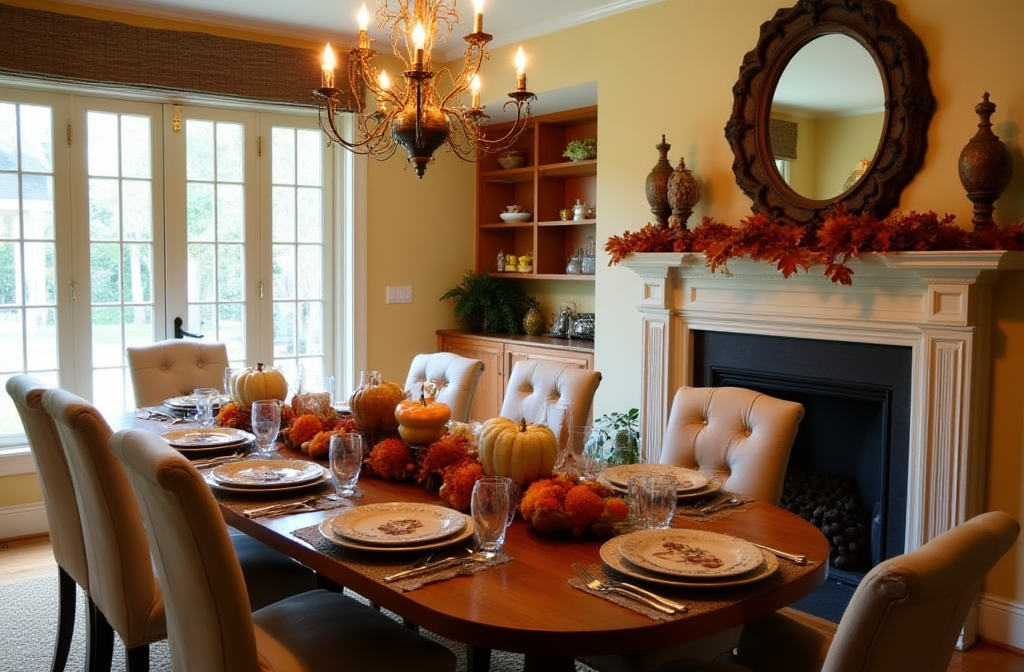
Aisha spent Wednesday arranging everything while the family was out. The six different chairs around the round table. The bench with its neat row of cushions. A low-hanging pendant light fixture with a brass finish that caught the afternoon sun and made everything glow. She added simple elements: a wooden bowl for fruit, cloth napkins in autumn colors, water glasses in amber glass that looked expensive but were actually from Target.
When the family came home, the kids rushed in first—each one heading straight for their chair, climbing into it, claiming it. Emma swung her feet, which didn't quite reach the floor. Tyler sprawled in his swivel chair and actually smiled. The middle kids jockeyed for position, testing who wanted to sit next to whom, working out the new geography of their family.
Sarah stood in the doorway with tears streaming down her face. "It's perfect. It's—they all fit. We all fit."
Thanksgiving Morning
Aisha didn't usually visit clients on holidays, but Sarah had texted that morning: Can you stop by? Just for a minute? I want you to see something.
She arrived at 10 AM to find controlled chaos—Marcus wrestling a turkey into the oven, kids running through the house in various states of dress, the smell of coffee and cinnamon rolls filling every room. But when she walked into the dining room, everything stopped.
The table was set. Not perfectly—there were mismatched plates because they'd combined Sarah's everyday dishes with Marcus's parents' china. The napkins weren't folded into fancy shapes. One of the water glasses was actually a mason jar because they'd apparently run out of the amber ones.
But every single kid was sitting in their chair, helping set the table, arguing about whether the forks went on the left or the right, laughing about something Tyler had said. The round table meant they could all see each other, all talk to each other, all be part of the same conversation instead of splitting into kid table and adult table.
"Look," Sarah said softly to Aisha, pulling her aside. "Emma asked if her mom could come see her fairy chair. Tyler told his friends about his cool new chair. This morning, Ava and Jordan were fighting about something, and Marcus told them to 'go sit at your table and work it out'—and they did. They actually sat down at that table and talked to each other until they figured it out."
She wiped her eyes. "You didn't just design a dining room. You designed a place where we can figure out how to be a family."
What Design Really Means
Driving home through Nashville's decorated neighborhoods—front porches lined with hay bales and pumpkins, windows glowing with the warm light of families gathering—Aisha thought about what design school never teaches you.
They teach you about proportion and scale, about color theory and material selection, about historical styles and contemporary trends. All of that matters. But the real work—the work that changes lives—happens when you understand that furniture isn't just furniture. A table isn't just a table.
Sometimes a round table is a declaration that everyone matters equally. Sometimes six different chairs are six different kids getting to bring something of themselves into a new family. Sometimes a built-in bench is permission to feel small and safe, or sprawled and angry, or anything in between.
Thanksgiving interior design 2025 could be about fall color palettes and seasonal centerpieces, about trending warm fall interiors and cozy home ideas. But the most meaningful design work happens when you stop thinking about trends and start thinking about lives—about the six-year-old who needs to feel big enough to belong, about the teenagers who need space to be moody, about the adults who need to build something new without erasing what came before.
The best interior designers aren't the ones who create the most beautiful spaces. They're the ones who understand that design is ultimately about helping people live better. Sometimes that means a room where grief can coexist with hope. Sometimes it means a table where two families can become one. Always, it means listening carefully enough to understand what a space needs to do, not just how it needs to look.
That round walnut table in Germantown would hold thousands of meals over the years. It would hold homework crises and birthday cakes, family meetings and game nights, fights and apologies and laughter and all the beautiful, messy work of becoming a family. The table itself was just wood and craftsmanship. But what it represented—what it made possible—that was everything.
This is what they don't tell you about Thanksgiving design, about healing through design, about any design that actually matters: you're not decorating. You're creating the stage where human lives unfold. You're building the foundation where families learn to become families, where kids learn they belong, where new traditions can take root alongside old memories.
And sometimes, if you listen carefully enough to what people need rather than what they say they want, you realize that a perfectly imperfect collection of six different chairs around a round table isn't a design compromise.
It's a family.
For every interior designer who understands that the most important design work doesn't make it into magazine features—it lives in the daily moments when people sit down together and feel, finally, like they're home.