The House That Remembered: An Interior Designer's Halloween Story About AI Design Tools and Creative Intuition
A cinematic Halloween story for interior designers exploring AI rendering, creative intuition, and the mysterious connection between imagination and reality in design.
The email arrived at 11:47 PM on a Tuesday in late September, which should have been the first warning.
I need someone who understands that beautiful things can be unsettling, it read. My home should feel haunted, but in the way old libraries feel haunted—like the walls are holding onto something worth keeping. I've seen your work. You understand shadow better than most designers understand light.
No name. No return address. Just a location pin dropped in Portland's historic Alphabet District and a request to begin immediately. Maya almost deleted it. Almost. But there was something about the phrasing—you understand shadow—that caught in her chest like a hook. She'd been designing pretty spaces for pretty clients in the Pacific Northwest for three years now, and she was so tired of pretty. She wanted to create something that felt like something.
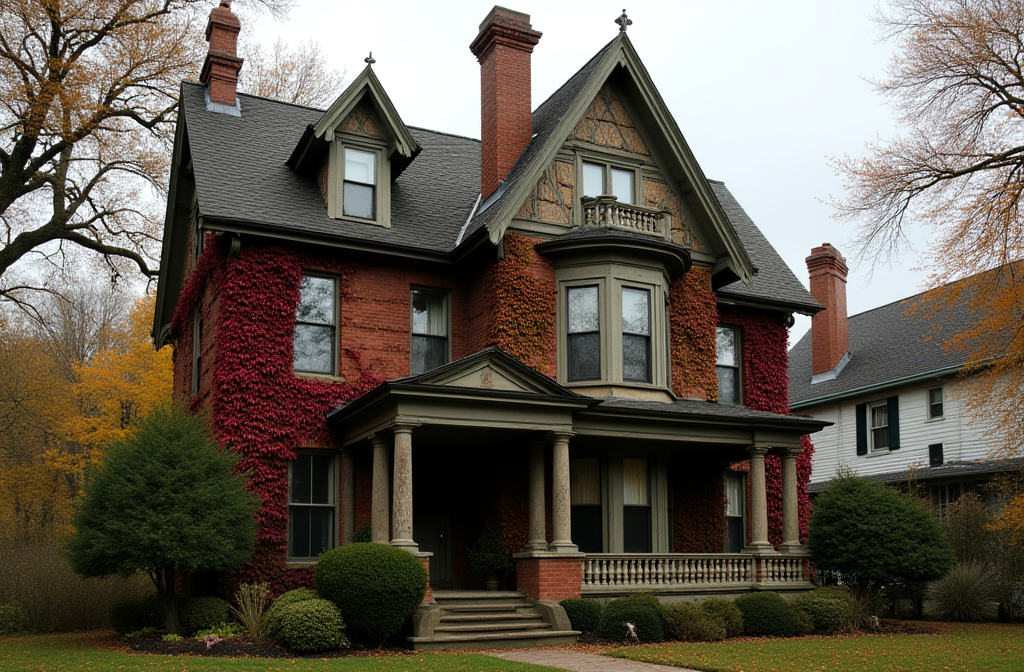
The house stood three stories tall in a neighborhood where Victorian architecture still dominated the skyline, its bones wrapped in climbing ivy that had gone burgundy with the season. Inside, it smelled of old books and beeswax, of time moving slowly through Pacific Northwest rain. The client—a woman who introduced herself only as E—moved through the rooms like she was afraid of disturbing something. She wore charcoal wool and spoke in half-sentences, gesturing toward empty corners as if furniture already occupied them.
"Here," E said, standing in what would become the library. "Can you make it feel like twilight? Permanent twilight, but the kind that makes you want to read poetry, not run."
Maya took notes in her leather journal, sketching sight lines and noting how afternoon light fell through the leaded glass windows in amber fragments. That night, back in her studio apartment in the Pearl District, she opened her AI rendering software and began translating E's vision into something tangible. She worked until 3 AM, layering textures in her interior design software—oxblood velvet against charcoal walls, brass sconces casting overlapping shadows, a reading chair positioned where two windows intersected to create a cross of light.
When the render finished processing, Maya sat back and stared. It was perfect. Too perfect. The shadows fell exactly as she'd imagined them, yes, but they also seemed to fall away from something, as if making room. The velvet curtains appeared to move slightly, caught mid-sway. She zoomed in. No motion blur in the render settings. Just... movement.
She told herself it was exhaustion. Sent the files to E. Received a single-line response: It knows what it wants to be now.
The rest of October unfolded in a rhythm of design and revision. Maya would create AI design renders during the day—a dining room dressed in deep plum and aged brass, a bedroom where midnight blue walls seemed to absorb light rather than reflect it, an entryway where a single amber sconce created a pool of warmth in an ocean of shadow. Each time, the interior design renders felt eerily complete, as if she wasn't designing spaces but rather discovering them.
And each time she reviewed the files, she noticed small inconsistencies. A candlestick that hadn't been in her object library. A portrait on the wall she didn't remember placing. Once, in the library render, she saw a hand resting on the arm of the reading chair—pale fingers, barely visible against the dark velvet. She checked her layer history. Nothing. The hand wasn't supposed to be there, but there it was, rendered in perfect detail down to the way light caught on what might have been a silver ring.

She should have stopped. Should have called E and explained that something was wrong with the AI design software, that she needed to start over with different rendering tools. Instead, Maya found herself working later each night, increasingly fascinated by what appeared in her renders. The spaces were developing their own logic, their own personality. They wanted certain things. The library insisted on a specific shade of green for the desk lamp. The dining room rejected modern chairs three times until Maya found an antique set with claw feet and burgundy leather.
On Halloween night, Maya received a final message from E: Come see it finished.
The house was exactly as she'd designed it, which should have been satisfying and instead felt like standing on the edge of something vast. Every shadow fell where she'd planned. Every texture caught light precisely as her renders had shown. But there was something else—a presence, a weight, as if the house had been waiting for someone to remember it correctly and now, finally recognized, it could settle into itself.
E stood in the library, barely visible in the deliberate twilight Maya had designed. "Do you know what you did?" she asked softly. "You didn't impose a vision on this house. You listened to what it wanted to be and gave it permission."
Maya looked around at the space she'd created—haunted, yes, but hauntingly beautiful. The shadows she'd designed weren't just absence of light; they were presence, weight, memory. The velvet curtains hung still now, but she could feel how they wanted to move, how the space held potential for movement, for life, for story.
"I think," Maya said slowly, testing the words, "I think the best design doesn't create something new. It just... reveals what was already there, waiting."
E smiled, and for a moment, standing in the amber glow of the brass sconces, she looked like she might be part of the render herself—a detail Maya had somehow known to include without knowing she was including it.
When Maya returned to her studio that night, she opened her AI rendering software and looked at all the files from the project. In every single interior design render, if she looked carefully, she could now see small signs of life. A book left open. A wine glass with burgundy residue. Impressions in velvet where someone had been sitting. The spaces hadn't just been designed—they'd been inhabited, even in digital form.
She thought about that email, the one that had started everything: You understand shadow better than most designers understand light.
Maybe the real revelation was this: light shows us what exists, but shadow shows us what could exist. And sometimes, when a designer understands that deeply enough, when they create space for shadow and memory and unspoken stories, the design doesn't just change how a space looks.
It changes what the space remembers.
And what remembers us back.
For every interior designer who has ever felt a space speak to them, who has known exactly where light should fall and shadow should gather—you're not imagining it. You're listening. And that's when the real magic happens.